Becoming More Yourself: The Quiet Mastery of Evolving Your Image With Age
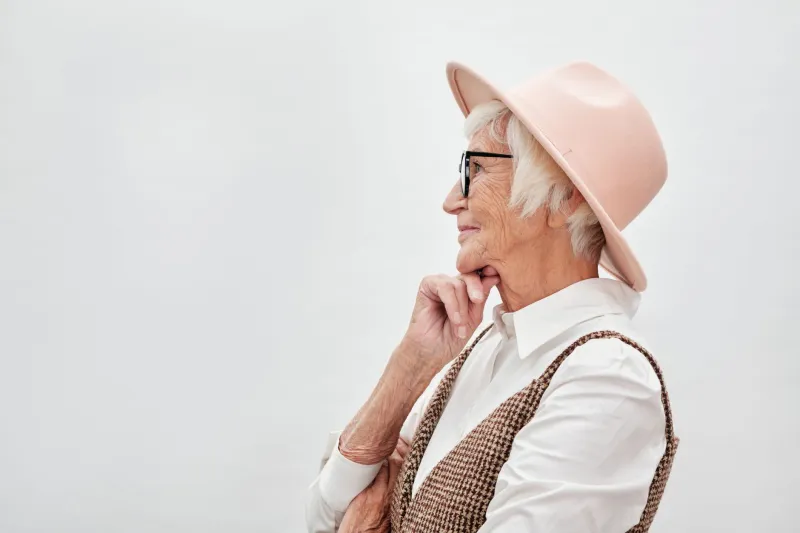
There is a particular kind of woman you have likely encountered at some point in your life—perhaps at a dinner party, a gallery opening, or seated across from you at a restaurant. She carries herself without apology. Her clothing is neither aggressively youthful nor matronly. Her beauty is deliberate, not desperate. She looks, in the most precise sense of the phrase, exactly like herself. This quality is not the product of good genes or a generous budget. It is the result of something far more intentional: a willingness to evolve.
In a culture that sells youth as the pinnacle of desirability, the truly sophisticated woman has quietly arrived at a different conclusion. She understands that personal style is not a fixed destination but a living practice—one that deepens, refines, and sharpens across decades. Aging well, in this context, has nothing to do with looking younger. It has everything to do with looking more like yourself than you ever have before.
The Tyranny of the Capsule Frozen in Time
One of the most common style missteps a woman can make is not the one fashion editors typically warn against. It is not wearing the wrong hemline or choosing an unflattering silhouette. It is, rather, the act of freezing one's wardrobe—and one's self-presentation—at a particular moment in time, as though some golden era of personal style has passed and anything that follows is merely a concession.
This tendency reveals itself in subtle ways. The woman who still reaches for the same bold lip color she wore at thirty-five because it once drew compliments. The one who refuses to reconsider a hairstyle that has not changed since the Clinton administration. The impulse is understandable—we cling to what once made us feel seen. But elegance asks something more courageous of us: the willingness to continually reassess.
A wardrobe that served you magnificently at forty may need quiet recalibration at fifty-five—not because you are diminished, but because you are different. Your priorities have shifted. Your confidence has deepened. The pieces that once felt like armor may now feel like costume.
What to Keep, What to Release
The art of evolving your image is not about wholesale reinvention. It is about discernment—a word that becomes more meaningful with each passing decade. Certain elements of personal style are worth protecting with great loyalty. A signature color palette, a commitment to quality over quantity, a particular silhouette that has always felt like home—these are the threads of continuity that make a woman's style recognizable across time.
What deserves regular reconsideration, however, is anything chosen out of habit rather than intention. Ask yourself honestly: Is this garment something I love, or something I simply have not yet had the occasion to question? Does this beauty routine reflect who I am today, or who I was ten years ago? These are not vanity questions. They are questions of self-knowledge.
Some practical guidance worth considering: fabrics that were once merely appealing become essential as the body changes. Cashmere, silk, and fine linen reward the woman who chooses them with a kind of grace that synthetic blends simply cannot approximate. Fit, always important, becomes paramount. A beautifully cut garment in a neutral color will consistently outperform a trend-forward piece in a less flattering proportion.
In beauty, the adjustments are equally meaningful. Foundations that once sat beautifully may need to be swapped for lighter formulations that do not settle into fine lines. Brows, frequently overlooked, often benefit from a slightly softer, more defined approach. A consultation with a skilled colorist—not to chase youth, but to find a shade that genuinely complements your current complexion—can be quietly transformative.
Dressing for the Life You Are Actually Living
One of the most liberating aspects of growing older is that the social performances of earlier decades begin to feel optional. The woman in her fifties and sixties has, in many cases, earned the right to stop dressing for other people's expectations and to begin dressing with extraordinary specificity for herself.
This does not mean abandoning elegance. It means applying it with greater precision. If your life is rich with travel, invest in clothing that moves beautifully and packs without drama. If your social world revolves around intimate dinners rather than large galas, your wardrobe can reflect that shift without apology. Style that is calibrated to your actual life will always read as more sophisticated than style that is performed for an audience you are no longer trying to impress.
The women who age most beautifully in the public eye—those whose style we continue to admire across decades—share this quality. They are not trying to look like anyone else, and they are certainly not trying to look like earlier versions of themselves. They look, with remarkable consistency, like the fullest expression of who they are right now.
The Beauty of Knowing What You Are Not
Perhaps the most underrated element of evolving one's image with grace is the confidence to decline. To look at a trend—however celebrated, however universally adopted—and say, with genuine equanimity, that it is simply not for you. This is not rigidity. It is self-possession.
The most stylish women of any age have a highly developed sense of their own aesthetic boundaries. They are not threatened by what they choose not to wear, not to do with their hair, not to adopt as a beauty practice. Their choices are made from a position of security rather than fear, and that security is visible in the way they carry themselves.
Aging intentionally, in the end, is an act of sustained self-knowledge. It asks you to remain curious about who you are, honest about what serves you, and brave enough to let go of what no longer does. The reward is a kind of style that no trend cycle can replicate—one that is entirely, unmistakably, and enduringly your own.