In Praise of the Unhurried: How Time, Not Things, Became the New Luxury

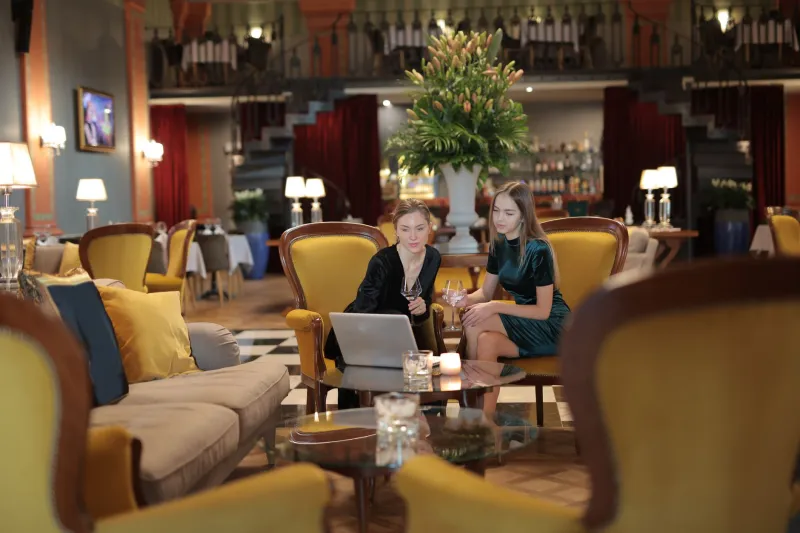
Photo by Photo by Connor James on Unsplash on Unsplash
Not long ago, the clearest signals of a well-appointed life were material: the address, the automobile, the watch on the wrist. These remain, of course, as legible as ever to those inclined to read them. But among those who have thought most carefully about what it means to live well, a different conversation has been underway for some time now—one centered not on what is owned, but on something far more difficult to acquire and far more impossible to fake.
The new luxury is time. More precisely, it is the experience of time: unhurried, expansive, and entirely one's own.
The Speed Trap
American culture has long maintained an uneasy romance with velocity. We celebrate the efficient, the optimized, the person who accomplishes more before nine in the morning than most manage in a day. Busyness, for decades, functioned as a status signal in its own right—to be perpetually occupied was to be perpetually important.
The consequences of this orientation have become increasingly visible. A culture that prizes speed above all else tends to produce experiences that are technically accomplished but aesthetically thin. The meal consumed at a desk. The conversation conducted while simultaneously checking a phone. The vacation photographed rather than inhabited. These are the textures of a life lived in the fast lane, and they share a common quality: they leave very little behind.
What the most discerning observers have recognized is that genuine quality—in food, in conversation, in experience of any kind—is inseparable from the time required to produce it. Speed and depth are, in most meaningful domains, inversely related. This is not a new insight; it is, rather, one that required the full force of contemporary acceleration to make newly apparent.
The Morning as Manifesto
Few things reveal a person's relationship with time as plainly as the architecture of their morning. The individual who wakes to an immediate cascade of notifications, who dresses in haste and consumes breakfast as a logistical afterthought, has already surrendered the day's most precious hours before they have truly begun.
Contrast this with the person who rises with sufficient margin to move through the morning as a ritual rather than a race. The coffee prepared with care and consumed while seated. The twenty minutes given over to reading something that has nothing to do with professional obligation. The unhurried attention to the mirror, the wardrobe, the small ceremonies that constitute a considered beginning.
This is not indulgence. It is, in fact, a form of discipline—one that requires the harder work of protecting time against the perpetual demands that would otherwise colonize it entirely. The person who has mastered the unhurried morning has, in a meaningful sense, mastered something essential about the art of living.
At the Table, Deliberately
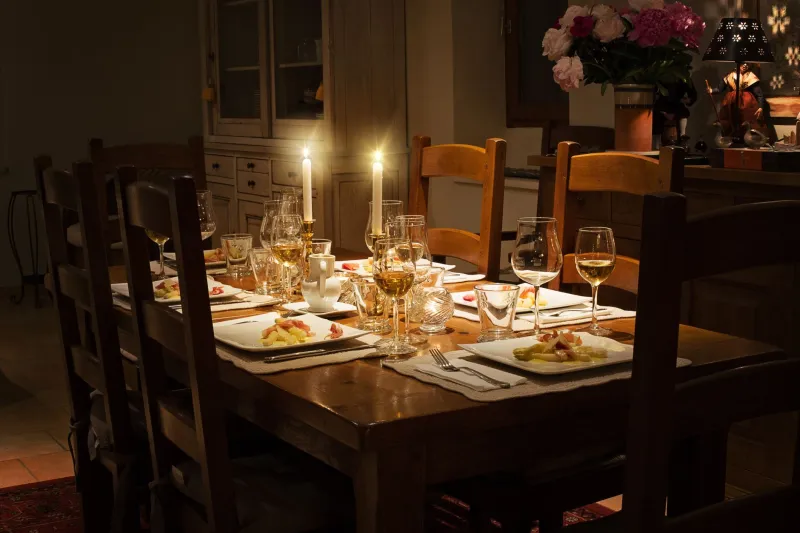
Perhaps nowhere is the distinction between hurried and unhurried living more pronounced than at the table. Dining, in its fullest expression, is not a refueling exercise. It is a social art, a sensory experience, and one of the oldest forms of civilized pleasure available to us.
The great dining traditions—French, Italian, Japanese—share a common understanding that a meal is not complete until it has been allowed to unfold at its own pace. Courses arrive with measured intervals. Conversation fills the spaces between them. Wine is considered rather than consumed. The table, at its best, becomes a kind of theater in which time itself is the stage.
In the American context, where dining culture has long been shaped by efficiency and portion size rather than pace and ceremony, the choice to dine slowly is almost a countercultural act. To linger over a meal—to order dessert, to accept a second glass, to remain at the table long after the plates have been cleared—is to assert, quietly but unmistakably, that you are not governed by the clock.
For those who entertain at home, this philosophy translates into a particular kind of hospitality: one that does not rush guests from cocktails to the table to the door, but instead creates an environment in which time feels generous. The unhurried host is, almost invariably, the one whose gatherings are remembered longest.
Slowness as Social Signal
There is something worth examining in the social dimension of unhurried living. In a world where speed is the default, the person who moves deliberately through it communicates something powerful: that they are not at the mercy of urgency, that they have arranged their life in such a way that they can afford to be present.
This is not about performance. The affected slowness of someone who wants to appear unbothered reads quite differently from the genuine ease of someone who actually is. The latter is the product of real choices, real editing of commitments, real willingness to say no to the things that would otherwise fragment one's time into unrecognizable pieces.
In social settings, the unhurried person is often the most magnetic. They listen rather than waiting to speak. They ask questions that suggest they have time for the answer. They do not glance at their phone during dinner. These behaviors, which might seem like simple courtesy, are actually quite rare—and their rarity is precisely what makes them so noticeable.
Cultivating the Unhurried Life
The practical pursuit of slowness is, paradoxically, something that requires active effort. It does not arrive by default; it must be chosen, repeatedly and often against considerable resistance.
Begin with the smallest margins. Add ten minutes to the morning. Eat one meal each week without a screen. Walk somewhere you might otherwise drive, not for exercise but for the experience of moving through the world at a human pace. These are modest interventions, but they carry a cumulative weight.
More significantly, examine the commitments that make slowness feel impossible. The calendar that is perpetually overbooked. The professional obligations that have expanded to fill every available hour. The social engagements accepted out of habit rather than genuine desire. The unhurried life is, in large part, a life that has been edited—and editing requires the willingness to disappoint, to decline, and to trust that what remains after the subtraction is richer for it.
Time, in the end, is the one resource that cannot be replenished. Those who have learned to treat it accordingly—to spend it with the same discernment they might bring to any other significant investment—have understood something that no amount of material acquisition can teach. In their unhurried grace, they carry the most authentic luxury there is.